Resting heart rate on your watch or ring: why devices disagree
Resting heart rate is one of the most reliable wearable numbers, but Oura, Apple Watch and Fitbit each define 'resting' differently. What it measures, how accurate it is, what raises it and when to see a doctor.
- Read
- 4 min
- Length
- 960 words
- Published
- By
- Data2Fit
Resting heart rate (RHR) is how many times your heart beats per minute when you're fully at rest. For most adults the American Heart Association puts the normal range at 60 to 100 beats per minute, and well-trained endurance athletes can sit far lower. What your wearable shows depends on when it decides you are resting. That is why a ring, a watch and a chest strap can give three different numbers for the same day.
What resting heart rate measures
At rest your heart only has to cover your body's baseline needs. A fitter heart pumps more blood with each beat, so it needs fewer beats to do the same job, which is why RHR tends to fall as aerobic fitness improves. Anything that adds load (fighting an infection, digesting a big meal, alcohol, heat, stress) usually pushes it up.
That makes RHR one of the simplest and most reliable numbers a wearable gives you. Unlike heart rate variability, it only needs a pulse count, not precise timing of every beat.
How each device decides you're "resting"
Watches and rings count your pulse optically: LEDs shine into the skin and a sensor reads the changing amount of reflected light as blood pulses through. The bigger difference between brands is which minutes they treat as rest.

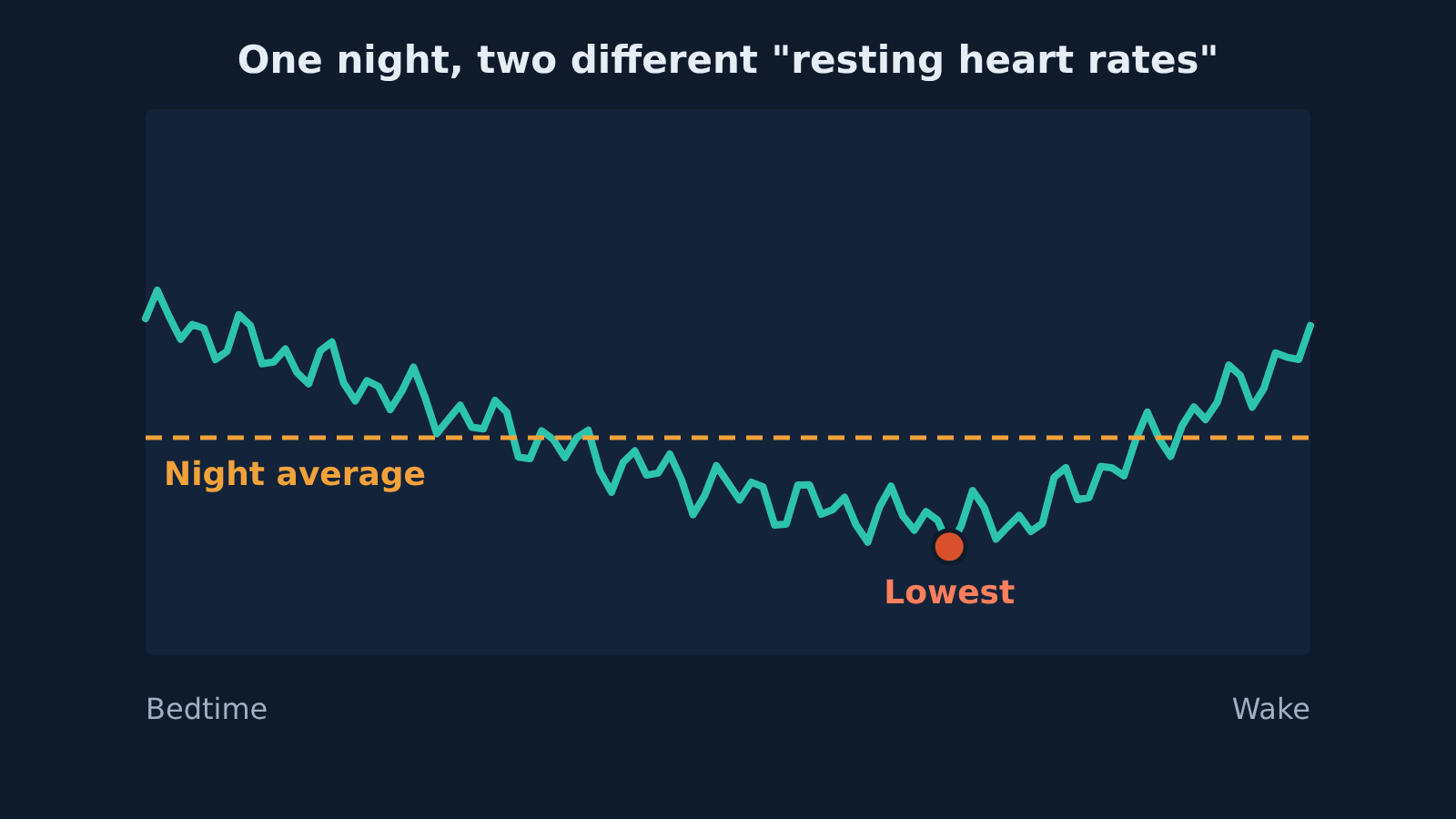
- Oura reports two overnight numbers: your average resting heart rate across the night and your lowest. The lowest will always be the smaller of the two, often by several beats.
- Apple Watch takes background heart rate readings while you're still and calculates a daily resting rate by matching those readings with motion data from the accelerometer, according to Apple's support page. Those still periods can be during the day.
- Fitbit uses heart rate data from both waking and sleeping hours to estimate resting heart rate, and recommends wearing the tracker to bed for the most accurate value.
So if your ring says 52 and your watch says 58, neither has to be wrong. One may be reporting your lowest sleeping value and the other a calm moment on the sofa. Pick one device and one definition, and track that.
How accurate it is
For overnight resting heart rate, consumer wearables can be very close to an ECG. A 2025 study by Dial and colleagues in Physiological Reports compared several devices with an ECG over 536 nights in 13 healthy adults. Oura Gen 3 and Gen 4 agreed most closely (concordance 0.97 and 0.98), Whoop 4.0 agreed moderately (0.91), and the Polar Grit X Pro less well (0.86). Garmin's resting heart rate was left out of that analysis because of differences in how it is recorded. It's a small study of healthy people, so treat the ranking as a guide rather than a verdict.
Accuracy depends on fit more than brand. A loose band, a ring on a finger it doesn't fit, tattoos under the sensor, or very cold hands can all weaken the optical signal. Wear the device snug, and for a ring, follow the maker's sizing advice.
You can sanity-check your own device. On a few mornings, before you get out of bed, find the pulse on your wrist or the side of your neck, count the beats for 30 seconds and double it. If that count lands close to your device's morning value, you can trust its trend. If it's far off, check the fit before blaming the sensor. A device that reports your lowest sleeping value will usually sit a few beats below a count taken after you wake, so a small gap in that direction is expected.
What moves your resting heart rate
Day-to-day, these are the usual suspects when RHR rises:
- Alcohol the evening before, which tends to keep the heart rate higher through the night.
- Illness, especially with a fever. A rise over several days is often one of the earliest signs.
- Hard training in the last day or two, while your body recovers.
- Heat, dehydration and short sleep.
- Stress and late, heavy meals.
- Medicines: some lower it (beta blockers are the classic example) and some raise it. If you've started a new medicine, ask your doctor or pharmacist whether it affects heart rate.
Over months, regular aerobic exercise is the main thing that lowers it. Oura's guidance is that a shift of more than about 3 to 5 beats per minute from your personal average can be a sign of low recovery or extra strain. That's a reasonable rule of thumb whichever device you use, as long as you compare like with like.
How to use it
- Set your baseline. Wear the device every night for two to three weeks and note your typical range, using the same definition each day (lowest or average, overnight or daytime).
- Watch for runs, not single days. One high reading after a late night tells you little. Several days a few beats above your usual is a good reason to take it easier, sleep more and keep an eye out for illness.
- Read it alongside other signals. RHR rising while HRV falls is a stronger hint of strain than either number alone.
When to see a doctor
Mayo Clinic advises seeing a health professional if your resting heart rate is regularly above 100 beats per minute, or below 60 if you're not a trained athlete, especially with symptoms. Don't wait for a trend in an app if you have chest pain, fainting, dizziness, a pounding or irregular heartbeat, or shortness of breath: get medical help. A wearable reading can support that conversation, but it can't diagnose anything.
