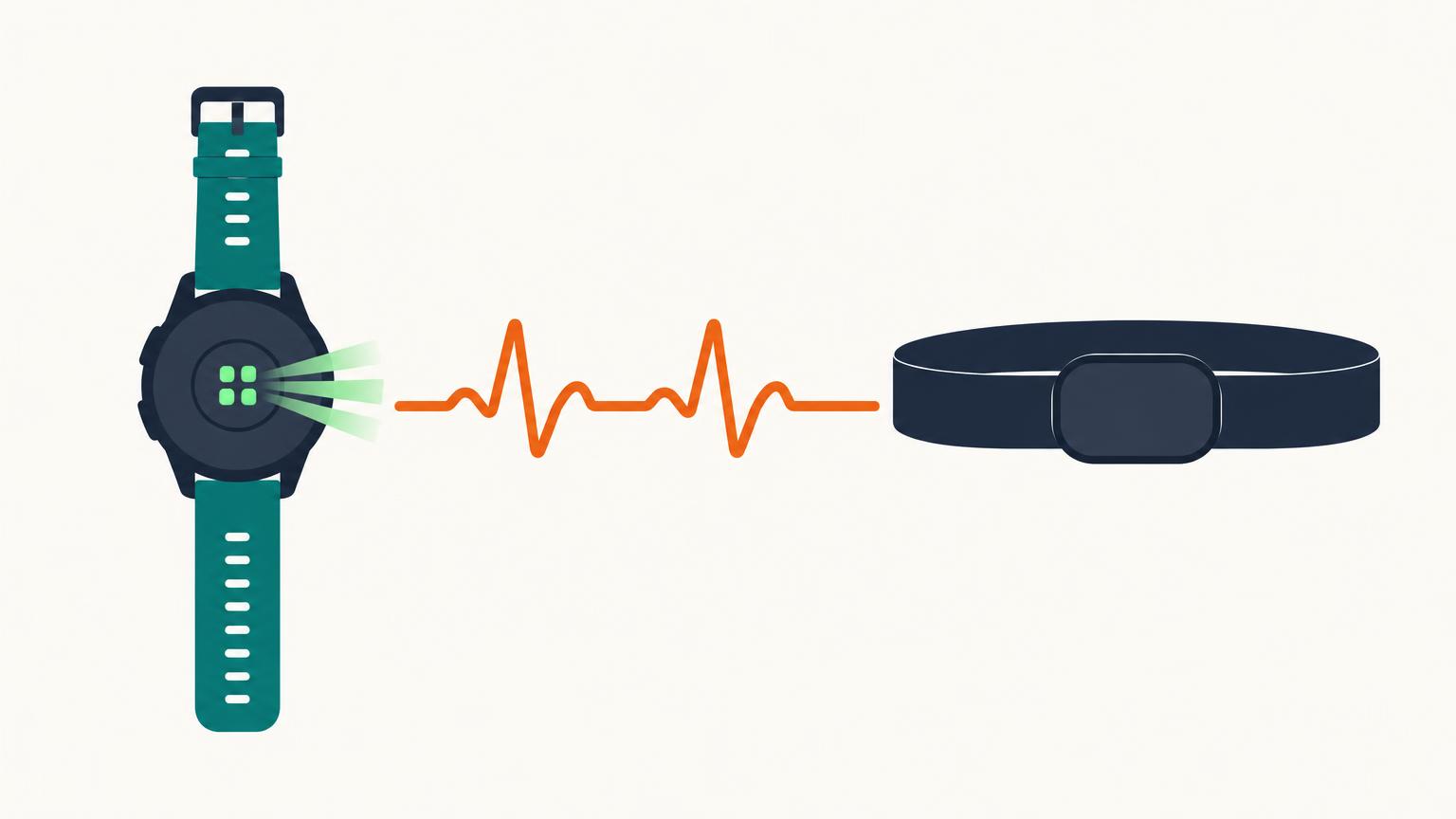
Wrist sensor or chest strap: when your heart rate reading falls behind
The wrist sensor reads blood flow, a chest strap reads the heart's electrical signal. That is why the wrist is fine for rest and steady runs but lags in intervals, lifting and the cold.
- Read
- 4 min
- Length
- 902 words
- Published
- By
- Data2Fit
A wrist-based heart rate is good enough for resting heart rate, easy runs and steady rides. For intervals, strength training, boxing and anything where your heart rate changes fast or your wrist flexes a lot, a chest strap gives a more trustworthy number. The difference comes down to what each sensor actually measures.
Two sensors, two different signals
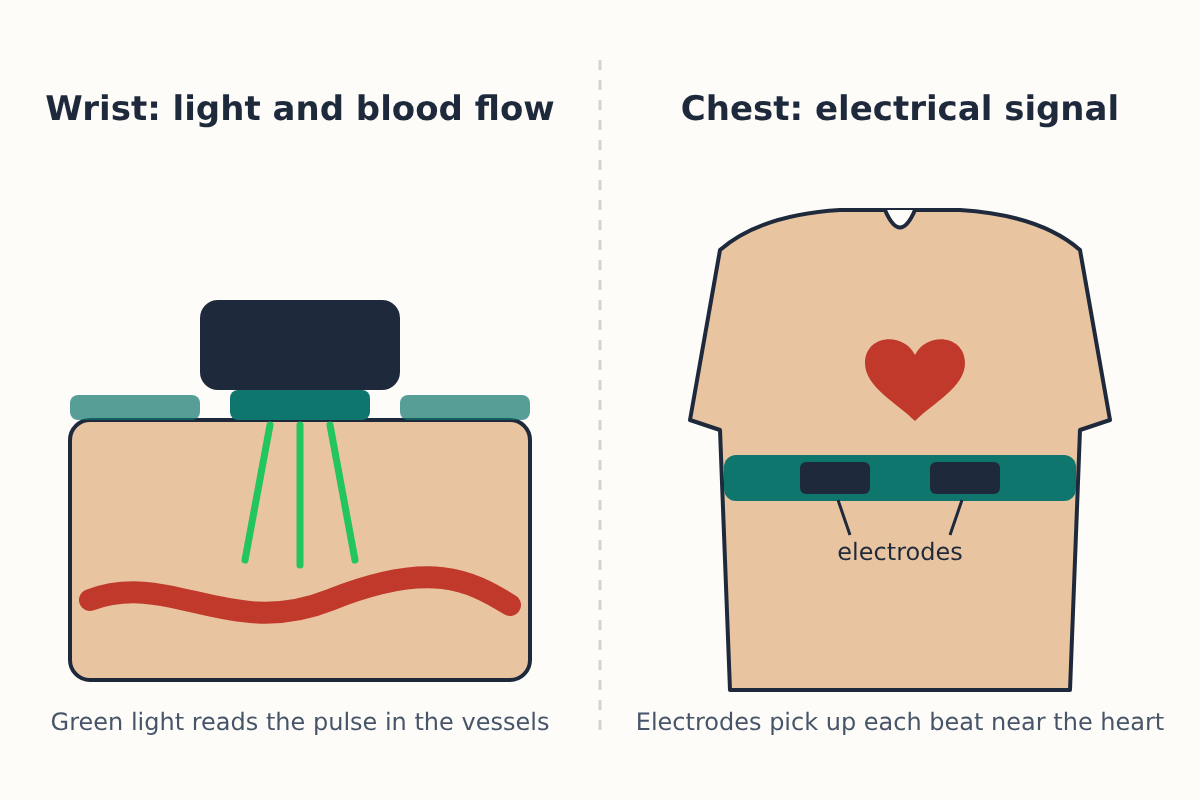
The optical sensor on the back of a watch or band measures blood flow. It shines light into the skin and tracks the small change in absorption each time a pulse of blood passes through the vessels under it. This method is called photoplethysmography (PPG).
A chest strap measures the heart's electrical activity. Electrodes on the inside of the strap pick up the same kind of signal an electrocardiogram (ECG) records, right next to the heart, and count each beat directly.
That one difference explains most of what you see in your data:
- The electrical signal is strong and happens at the moment of each beat.
- The optical signal is a small pulse in blood flow at the wrist, after it has travelled down the arm, and it has to be separated from changes caused by movement and outside light.
This is also why research teams use chest straps or lab ECG as the reference when they test wrist devices.
When the wrist reading drifts
Optical readings struggle in three situations.
Fast changes in effort. When you go from jogging to a sprint, your heart rate climbs within seconds. The watch's algorithm needs a run of clean pulses to be sure of a new rate, so an optical reading tends to rise later and smooth over the peak. Rest periods show the same lag on the way down.
Wrist movement and grip. Lifting, rowing, boxing, racket sports and push-ups flex the tendons under the sensor and shift the watch on the skin. Apple's guidance on accurate measurements says rhythmic movement such as running or cycling gives better readings than irregular movement such as tennis or boxing.
Cold and low blood flow. Apple also notes that blood flow through the skin varies between people and with temperature, and that in the cold the wrist may have too little for the sensor to get a reading.
A validation study of 28 adults that used the Polar H10 chest strap as its reference found the optical devices agreed closely with it at rest, and that accuracy fell as movement intensity rose. That pattern matches what most people see in their own workout graphs: the wrist is close on calm days and less sure in hard, jerky efforts.
When the wrist is good enough
For many uses the optical sensor is the right tool, because it is the only one you will wear all day and night:
- resting heart rate and its trend over weeks
- overnight heart rate and HRV, measured while you are still
- easy runs, walks and steady cycling at an even pace
These are the readings behind most readiness and recovery scores, and they are taken when you are still or moving rhythmically. Getting the watch's fit right does more for them than any extra hardware. Our guide on how to wear your tracker for accurate heart rate covers placement, tightness and the habits that keep the sensor clean.
When a chest strap is worth it
A strap earns its place when you care about the shape of the heart rate curve inside a session:
- interval sessions where you train by heart rate zone
- strength, CrossFit-style and boxing workouts
- cold-weather runs and rides
- any test where you want a precise maximum heart rate
It also helps with training-load numbers. Several watches estimate the strain of a workout from heart rate, so a lagging or noisy wrist reading can change the load figure the watch reports for that session.
How watches use a paired strap
Most sports watches can take heart rate from a strap instead of the wrist sensor:
- Garmin. Garmin's manuals say that when both wrist heart rate and a chest strap are available at the start of an activity, the watch uses the chest strap data. Straps are paired from the watch's sensors menu.
- Apple Watch. A Bluetooth heart rate strap pairs from Settings, then Bluetooth, on the watch itself. Pair it and put it on before you start the workout so the Workout app can find it.
Not every tracker accepts an external strap, so check your device's manual before you buy one. Many straps broadcast over both Bluetooth and ANT+, which widens the list of watches, bikes and apps they can talk to.
Getting a clean chest reading
Straps have their own quirks. The electrodes need moisture to conduct, so dampening them before you start avoids odd readings in the first minutes of a dry, cold session. The strap should sit just below the chest muscles, snug enough not to slide. Rinse it after use, because dried sweat on the electrodes can cause spikes later.
Whichever sensor you use, compare like with like: judge a workout's heart rate against your own past sessions measured the same way, not against someone else's numbers.
Chest pain, dizziness or fainting during exercise, or an irregular rhythm alert from your watch, needs a doctor, not a better sensor.
